
Alpine pasture season
Categories: traditional craftsmanship; knowledge and practices concerning nature and the universe; social practices, rituals and festive events; oral traditions and expressions.
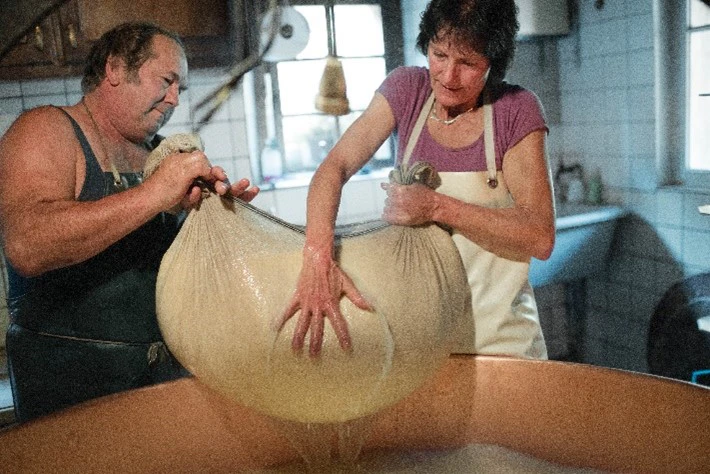
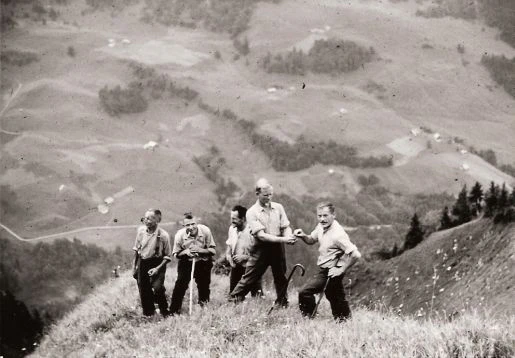
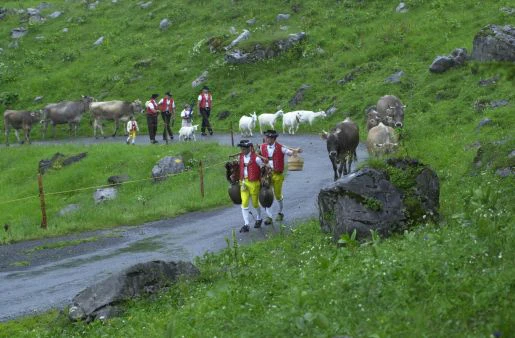
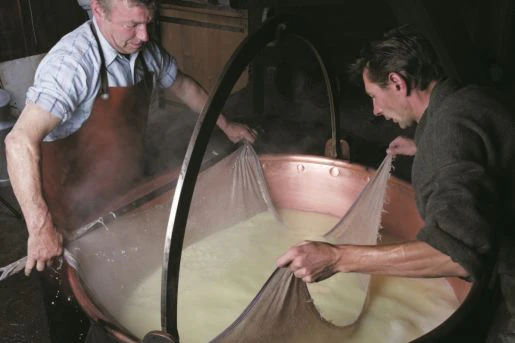
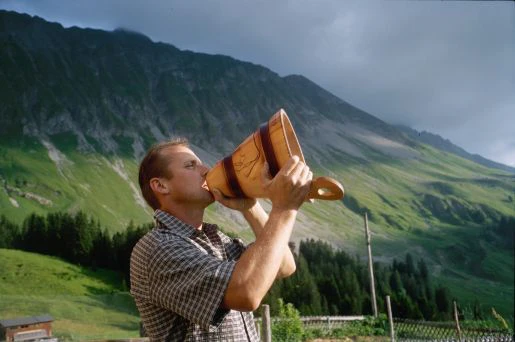
With its many variations and local specificities, the Alpine pasture season has its roots in a practice that has been widely documented since the late Middle Ages. Between May and October, cattle, sheep and goats are driven to high altitude pastures (between 600 m and 2,900 m) to take advantage of the extra forage. There, Alpine herdsmen and women manage the herds and care for the animals, work on the maintenance of the pastures, fences and buildings, process the milk into cheese and other products, and also welcome visitors. The practice creates economic and emotional ties between the local population, the Alpine herdsmen and women and the Alpine pastures and thus contributes to the maintenance of centuries-old cultural landscapes.
The Alpine pasture season has given rise to the knowledge and skills needed to maintain the sites and utensils, as well as to a variety of social practices. These include rituals, costumes, local festivals such as the inalpe (ascent), désalpe (descent) and, depending on the region, midsummer, or events where the most beautiful cow in the herd is chosen. These customs are passed on within families and through practice. While the presence of the animals in the mountains plays an important role for visitors, festivals celebrating craftsmanship are important events in the local calendar. For two and a half centuries, artists have been celebrating the Alpine pasture and the chalet as emblems of a life close to nature in literature, visual arts, music and on stage. The farming of Alpine pastures with livestock thus maintains a set of traditions in a living social reality, in cultural landscapes that have been worked on for centuries, in connection with renowned and recognized food production.
On 5/6 December 2023, the 18th session of the Intergovernmental Committee for the Safeguarding of the Intangible Cultural Heritage in Kasane (Botswana) inscribed the Alpine pasture season on the Representative List of the Intangible Cultural Heritage of Humanity.
Federal Office of Culture
Section Culture and society
Hallwylstrasse 15
3003 Bern