
Winners 2026
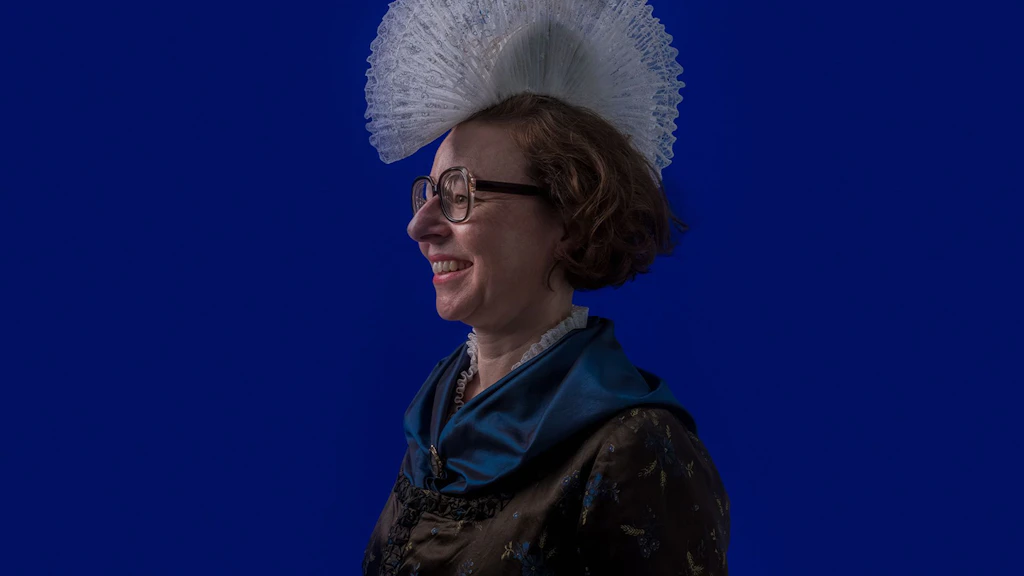
Nadja Räss – Yodeler and cultural mediator with roots and vision
Swiss Grand Award for Music 2026
Nadja Räss is a singer, vocal coach and networker. Born in 1979 and raised in Einsiedeln, she is one of the leading voices in Swiss yodeling culture. Coming from a family where folk music was highly valued, she knew from an early age that she wanted to become a yodeler.
After studying classical singing, Räss devoted herself entirely to her passion and developed a repertoire ranging from orally transmitted traditional yodeling to new compositions. With Markus Flückiger (Sälbander), Willi Valotti, Rita Gabriel Schaub, the group Alderbuebe or in a trio with Outi Pulkkinen from Finland and Mariana Sadovska from Ukraine, the singer from the canton of Schwyz regularly creates spaces in which she also involves her students. As a soloist, she has performed with the St. Gallen Symphony Orchestra and the Swiss Orchestra and in 2015 she took over as director of the Jodelklub Waldstatt Echo Einsiedeln.
From 2012 to 2018, Nadja Räss was artistic director of Klangwelt Toggenburg. It was a formative period, though one in which she found little time for making music herself. Since 2018, she has served as Professor of Yodeling and Head of the Folk Music Department at Lucerne University of Applied Sciences and Arts – a role she performs with just as much passion as she does her own art. Her credo: those who teach must remain learners themselves. Staying curious means discovering new things.
Räss also played a key role in ensuring that yodeling was included on UNESCO’s list of intangible cultural heritage. In 2025, she received the Goldener Violinschlüssel award, the highest honor in Swiss folk music. The singer is constantly active: In 2026, her schedule includes a world premiere with the Swiss Orchestra and a solo role in the cantata Dorothea, as well as teaching courses and the Eurovox Congress for voice experts in Lucerne. Or, as Nadja Räss once described her creative energy herself: “A tree with deep roots can also bear much fruit.”
Excerpt from the jury statement
Her ability to build bridges between regional traditions, contemporary artistic forms of expression and international perspectives make her an important figure in Swiss music. As the first Grand Prix laureate from the field of Swiss folk music, her long-standing commitment is highlighted in a particularly visible way.
Swiss Music Prizes
Domi Chansorn – Making music with the devotion of a child at play
Domi Chansorn composes, produces and plays a wide range of instruments. Born in Huttwil in 1988, this multi-talented artist moves between a diverse array of genres, seeking the same essence in each: the honest, unguarded moment. The drums became his most important instrument and a means of self-healing.
At the age of 14, a scholarship took him to New York City and from then on, his focus was entirely on music. Numerous further accolades followed, including in 2024 the Werkjahr of the City of Zurich, which serves as his place of residence and creative work. Over the years he has toured and performed in concerts with Sophie Hunger, Bonaparte, Fred Frith and Colin Vallon. On stage, from the very first note, Domi Chansorn whirls like a tornado and is at the same time in a trance. The driving force: cultivating trust in one’s own path. In 2026, new works will be released featuring various Swiss Music Prize winners (including Béatrice Graf, Tapiwa Svosve and Ganesh Geymeier). A second solo album is planned for 2027; the first – hoppalulu bum – matured over ten years in his own studio and was released in 2022.
His work is increasingly focused on his own artistic practice, always seeking depth, even if that makes the path more difficult.
Excerpt from the jury statement
This award recognizes Domi Chansorn’s outstanding musical quality, his indisputable presence in the Swiss music scene, his versatility and his artistic courage.
Ensemble ö! – Curiosity and consistency in the universe of contemporary music
For over two decades, Ensemble ö! has been dedicated to contemporary music and opening up new worlds. Founded in Chur in 2002 by David Sontòn Caflisch, it has established new music in a region where it previously barely existed. Today, the ensemble has 13 members and is an integral part of the Swiss music scene.
Each program forms a self-contained whole, linking compositions around thematic focal points to create an overall dramaturgy. Collaboration with various composers and the revival of works are central concerns for the ensemble. In 2019, ö! founded the Biennale Tuns Contemporans, which it organizes in collaboration with the Graubünden Chamber Philharmonic. The ensemble has performed at festivals including the Munich Biennale, the London Ear Festival and the Archipel Festival in Geneva. In 2026, it will launch a summer academy with ComposersLab in its home region and give a guest performance at the Label Suisse Festival.
When the idea of a contemporary ensemble in Graubünden first arose, people said nobody would be interested. Ensemble ö! continues to prove the opposite: with curiosity and determination.
Excerpt from the jury statement
Ensemble ö! is firmly rooted in Graubünden, performs throughout Switzerland and across Europe, and has established itself as one of the key players in contemporary music in Switzerland.
Esther Hoppe – A violinist between music and humanity
Esther Hoppe puts the music first, not herself. Born in Zug in 1978, the violinist has pursued an international career as a soloist, chamber musician and pedagogue for over two decades. Her values are rooted in clarity, patience and the conviction that honesty in performance is more important than pleasing. The central pillar of it all: her family.
Hoppe studied in Basel, Philadelphia, London and Zurich and has won, among other prizes, the International Mozart Competition in Salzburg and the ARD Competition in Munich. Her complete recording of J. S. Bach’s solo works for violin was met with great acclaim worldwide. Since 2013, she has been teaching as a professor of violin at the Mozarteum in Salzburg, where she passes on her knowledge to a new generation.
In 2025, Hoppe returned to Switzerland to take over as artistic director of the Camerata Zürich. She finds inspiration in encounters with people, in nature and in observing other art forms. No two weeks are the same for her. What remains is the drive to make music as directly accessible as possible.
Excerpt from the jury statement
As an interpreter of the highest level, Esther Hoppe enjoys great recognition in the classical music scene and serves as a bridge between the stage and teaching.
Flèche Love – An experimental laboratory and a path to personal healing
Flèche Love is Amina Cadelli’s main project. Born in Geneva in 1990 and shaped by her Amazigh roots, Cadelli describes herself as a living experimental laboratory: electronics, vocals, dance and performance all combine to create a body of work that defies categorization. The three albums released to date feature music in French, English, Arabic and Spanish, with a new record planned for 2027. Authenticity and integrity permeate her entire body of work.
Cadelli sang classical and baroque repertoire at the conservatoire, improvised at jazz sessions and studied ethnology and religious studies in Neuchâtel. Exchanges with the singer Rachid Taha were also formative; Cadelli contributed to his posthumous album Je suis africain.
The solo project Flèche Love was launched in 2017. Thematically, it revolves around healing, reconnection, feminism and the question of what it means to live between cultures. Science, particularly astrophysics and ethology, forms an equally important point of reference as a love of the absurd.
Excerpt from the jury statement
Active for several years on the international scene as an urban, independent and multifaceted artist, Flèche Love is gaining increasing recognition – a recognition that is now finally being acknowledged in her home country with a Swiss Music Prize.
Louis Schild – A hyperactive force of sound
Louis Schild is a bassist, composer and performer. Born in 1991 and based in Lausanne, he blends improvisation, noise, rock and contemporary music. A hyperactive force of sound, he is always accompanied by his black Sadowsky electric bass.
He performs with, among others, Jacques Demierre, Louis Jucker and the Biel-based band Puts Marie. Beyond music, Schild collaborates with choreographer Cindy Van Acker and runs Espace Echallens 13 in Lausanne, a venue for concerts, exhibitions and talks. Upcoming projects include a collaboration with dancer Mélissa Guex, a tour with Remords and a new album with Le Recueil des Miracles.
His work oscillates between two poles: on the one hand, the explorations of sound phenomena and playing techniques; on the other, reflections on social issues.
Excerpt from the jury statement
As a boundless improviser and an artist of sound and space, Louis Schild resolutely defends another way of living and creating. This Swiss Music Prize recognizes the breadth of his experimental work, the determination of his sound research and his strong commitment to the collective.
Patricia Draeger – An accordionist bridging cultures
Patricia Draeger has spent decades exploring the worlds of folk music, jazz and the sounds of other musical traditions. Born in Zug in 1964, the accordionist sees her instrument as a connecting element: she creates textures, sounds and atmospheres that allow musicians from different cultures to come together into a single whole.
Raised in a musical household, Draeger started playing the accordion at the age of four and soon added piano and flute to her repertoire. Her journey took her from studies in contemporary music and stays in Amsterdam, to the new folk music of Hans Kennel’s Alpine Experience, across Europe with the Yehudi Menuhin-supported Trio Avodah, as well as across Asia with Heiri Känzig’s Tien-Shan-Express. She has had a close collaboration with Albin Brun for over 20 years and, through Corin Curschellas, she came to know the Romansh folk song tradition. Other key figures include Christy Doran, Isa Wiss, Sina and, of course, her husband: the accordionist Sergej Simbirev, to whom she has been married for over 30 years.
A residency in Cairo became a key experience for Draeger and led to the founding of her ensemble Ala Fekra, a collaboration with Egyptian musicians. The ensemble will present its second CD in December 2026.
Patricia Draeger finds peace and tranquility in nature, which she describes as her most important inspiration alongside music.
Excerpt from the jury statement
Patricia Draeger is a musical border-crosser, always on equal footing and far removed from folkloristic exoticism.
Ruedi Häusermann – Inventor of a music-theatrical language
Ruedi Häusermann is a musician, composer and director. Born in Lenzburg in 1948, he has spent decades developing an art form that combines written music and improvisation with theatrical ideas. Central to this is an underlying atmosphere of good humor.
Häusermann discovered the clarinet through the cadet band. He has been passionate about jazz since childhood and was playing in Pepe Lienhard’s first big band whilst still a pupil at high school. This was followed by a degree in economics, then in music with a focus on the flute. Since the 1990s, the Aargau-born artist has been staging musical theatre works, including at the Burgtheater in Vienna, the Volksbühne in Berlin and the Münchner Kammerspiele. Häusermann’s piano and string quartets run like a thread through all his works.
His sources of inspiration are people, particularly the world of children and the natural surroundings of his studio on the Goffersberg. To this day, Ruedi Häusermann lives with his family in Lenzburg, where he organizes the “Zwischenräume” concert series for improvised contemporary music. Häusermann’s latest play, entitled You might be thinking, what’s that I hear and I’ll tell you – it’s the washing machine, is currently running at the Schauspielhaus Zürich. Subtle humor remains a constant companion to the seriousness of his work.
Excerpt from the jury statement
Ruedi Häusermann enchants his audience. Leaving one of his performances, the world suddenly seems a little more at peace.
Special Prizes for Music
Café Bar Mokka – A Thun space where subculture found its home
Café Bar Mokka in Thun has been, since 1986, an independent cultural venue outside the mainstream. At its heart lies a question that remains relevant to this day: where can people find a space where they can simply be themselves, without having to explain themselves?
Over 6,000 concert evenings have been hosted to date, featuring acts ranging from Element of Crime and Fettes Brot to Sophie Hunger and Fatoumata Diawara, right through to Stiller Has and Züri West. Mokka is not just a venue, but also a social space: a breeding ground for sound and subculture, shaped by a DIY ethos, hospitality and the heart and soul of its founder, MC Anliker, who passed away in 2016. The team in charge today continues in this vein. Culture at the Mokka is created by people, instinct and passion – and the community spirit is always stronger than any individual interest. This is also reflected in the program: alongside regular concerts, new projects and formats are constantly being developed. In summer 2026, the 21st edition of the “Am Schluss” festival will take place, followed by Baze performing Züri West’s repertoire in the venue’s own garden. In September, collaborations with Grand Hotel van Cleef and Mühle Hunziken will follow.
Café Bar Mokka remains a place that remains true to itself while never repeating itself. Always under the motto: “Wir waren hier und es hat uns gegeben.” (“We were here and we existed.”)
Excerpt from the jury statement
Mokka is more than just a venue. As a vibrant and resilient cultural space, it is recognized for its commitment to free and uncompromising music.
Intakt Records – A hub for jazz and boundary-crossing music, Zurich (ZH)
Since 1986, the Zurich-based label Intakt Records has been releasing music in Switzerland, Europe and the USA. The catalogue now comprises over 455 releases. There are no fixed genres: acoustic and electroacoustic music, jazz, rock and new music all find an equal place and are close to the label’s heart.
Founded by Patrik Landolt and Rosmarie Meier, Intakt arose from a specific need: no record label wanted to release Irène Schweizer’s (Swiss Grand Award for Music 2018) concert at the Taktlos Festival as a recording. So, they launched Intakt Records and began to self-publish. Today, a four-person team led by Florian Keller supports musicians over the long term and across generations. This means not ‘just’ individual albums, but entire careers: from other Swiss Music Prize winners such as Sylvie Courvoisier (Swiss Grand Award for Music 2025) to Fred Frith and Elliott Sharp, right through to James Brandon Lewis and Ingrid Laubrock.
In 2026, the label will celebrate its 40th anniversary with 16 new releases and anniversary concerts in Basel, Zurich, Schaffhausen and Biel/Bienne. This demonstrates once again that Intakt Records has never been an ivory tower, but rather a place where music engages with political and social issues.
Excerpt from the jury statement
Intakt is a label, but also an organizer and an ambassador, and year after year it contributes to documenting contemporary jazz and contemporary music, enabling the Swiss scene to connect internationally.
La Via Lattea – Musical pilgrimages where the landscape becomes a theatre
La Via Lattea is a cultural project that bridges music with disciplines such as theatre, literature and film, in constant dialogue with the territory. Founded in 2004 by the Ticino composer Mario Pagliarani as part of his Teatro del Tempo, it creates auditory experiences in unusual locations at unexpected times.
The format is a route walked on foot: concerts, readings and performances take place in woods, fields, quarries, on bridges or in buildings of architectural interest. The participants, known as “Viandanti”, who travel from Switzerland and further afield, contribute to the score as part of a pilgrimage. The programs are conceived like compositions, with the landscape forming the setting. Between the stations, the participants walk, discuss and listen, just as on a pilgrimage. The question running through La Via Lattea might be: Is there a secret relationship between music and the universe?
This creates an interplay between culture and nature that sharpens the perception of both contemporary and historical creations. Always on the move, discovering music and oneself: the world as a vast score, where everyone participates simultaneously as both composer and performer.
Excerpt from the jury statement
The continuous development of this festival, grounded in continuity and a tangible local impact, makes it a key fixture in the cultural landscape of Ticino and a model for how artistic exploration can generate new forms of participation.
Federal Office of Culture
Cultural Creativity and Prizes
Music
Hallwylstrasse 15
3003 Bern